


*Disclaimer: Student Project, Seneca Hackathon 2025
Rebites
Teaching Sustainability Through Every Bite
Role
UI/UX Designer
Involvement
UI Design, UX Research & Pitch Presentation
Timeline
4 days
Team Members
Jifan Li, Zixuan Zheng, Han (Kristin) Xie & Kex Zhang
Tools
Figma & Canva
01
OVERVIEW
The Challenge
Food waste remains a significant contributor to environmental and economic strain. This is intensified by climate change, rising costs and limited resources. This challenge is about finding new ways to cut food waste, improve supply chains, support local farmers, and promote responsible sourcing.


02
RESEARCH
Problem Statement
Despite growing awareness of food sustainability, many communities lack practical and engaging tools to reduce food waste, support local farmers and make responsible food choices within everyday food systems.
Research
Our research revealed that one of the key issues is the lack of sustainability education at a young age, which limits children’s understanding of food waste and its environmental impact. To explore this further, we conducted primary research through a survey with 24 participants to understand the challenges people face when trying to reduce food waste.
Within the span of 20 hours, my team and I reviewed multiple scholarly resources to gather qualitative insights on food sustainability and waste reduction. We also conducted a competitor analysis to evaluate existing platforms that help children learn about food waste and sustainability, allowing us to identify gaps and opportunities for differentiation.
Secondary Research on Food Waste
65%
Parents are concerned about uneaten school lunches due to their environmental impact.
(Too, 2024)
90%
Parents say a portion of their child's lunch returns home uneaten each week.
(Too, 2024)
65%
Children typically throw out the leftovers, most of which are fruit
and veggies.
(Too, 2024)
Key findings from Primary Research Survey

Barriers to Reducing Food Waste
Participants identified several challenges that make it difficult to consistently reduce food waste in their daily lives. The most common barrier was inconvenience, with 9 out of 24 participants explaining that sustainable habits can be difficult to maintain within everyday routines. 7 out of 24 participants also highlighted lack of awareness, indicating that many people do not fully understand the environmental impact of food waste. Lastly, 4 out of 24 participants reported lack of time, noting that busy schedules make it difficult to prioritize sustainable practices.

Interest in Sustainability Partnerships
15 out of 24 participants expressed interest in partnering with a sustainability-focused app to promote food waste reduction, indicating strong support for collaboration with local businesses.

Interest in a Gamified Sustainability App
18 out of 24 participants showed interest in using an app that teaches food sustainability through gamification and interactive experiences.
Competitor Analysis
We analyzed various apps to understand existing solutions and explore the platforms that are currently aimed to help students learn about climate change and food waste. We have identified two simulation game platforms to teach students about food waste. There is currently no direct competitor offering an interactive, food upcycling, sustainability-focused food education app.

EduKitchen
Offers many mini-games focused on food, sorting, cooking, and healthy choices that keep young kids engaged.
Teaches basic skills like counting, sorting, and healthy eating through play.
Includes voice-overs in many languages, making it accessible for diverse learners.
Designed for toddlers and preschoolers (ages 2–6)
Focuses more on general food play and basic nutrition rather than deep lessons on food waste or sustainable choices.

Fork Ranger
Provides facts, infographics, and daily quizzes about sustainable eating and food systems.
Uses gamification (daily tasks, quizzes, recipes) to help users build sustainable habits.
Has thousands of users and reported measurable changes in eating behaviour after use.
Geared toward adults, not designed specifically for kids or classroom learning.
Focuses on climate science, diet choices, and recipes that may be too advanced or irrelevant for young learners.
03
VISUAL DESIGN
The Design System
Style Guide

04
DELIVERING
Final Designs
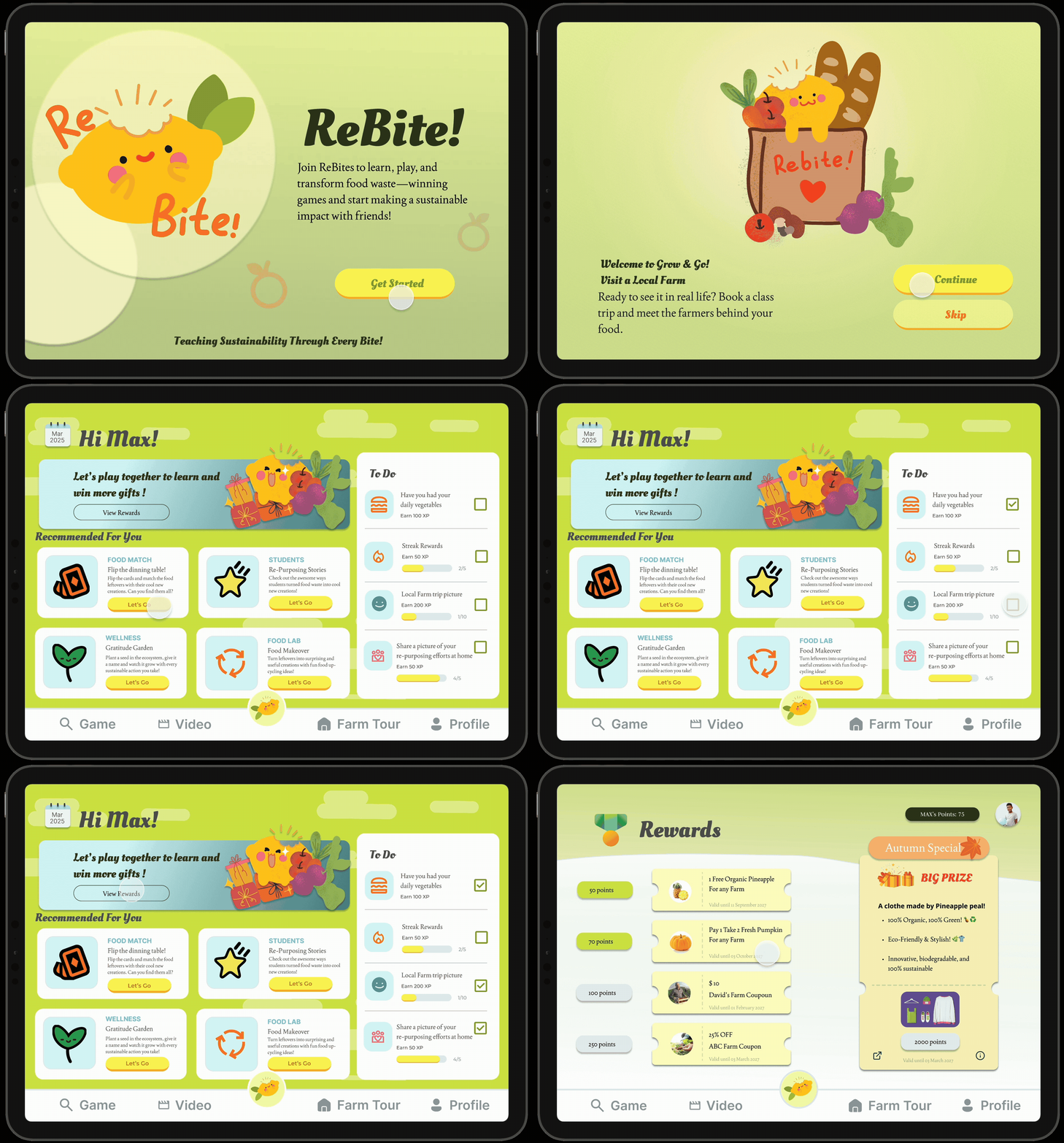
Presenting ReBite, a gamified learning platform designed to help elementary school students better understand food waste and sustainability. Through interactive games and engaging activities, the platform teaches children how to reduce food waste, repurpose leftovers, and develop sustainable habits in a fun and accessible way.
Interactive Learning
.png)
ReBite introduces food sustainability through short videos, mini-games, and visual storytelling that make complex topics easy for young learners to understand. Students explore how food grows, how waste impacts the environment, and how overripe fruits and vegetables can be repurposed into new products. By combining education with engaging media, ReBite transforms sustainability lessons into fun and memorable learning experiences.
.png)
Gamification
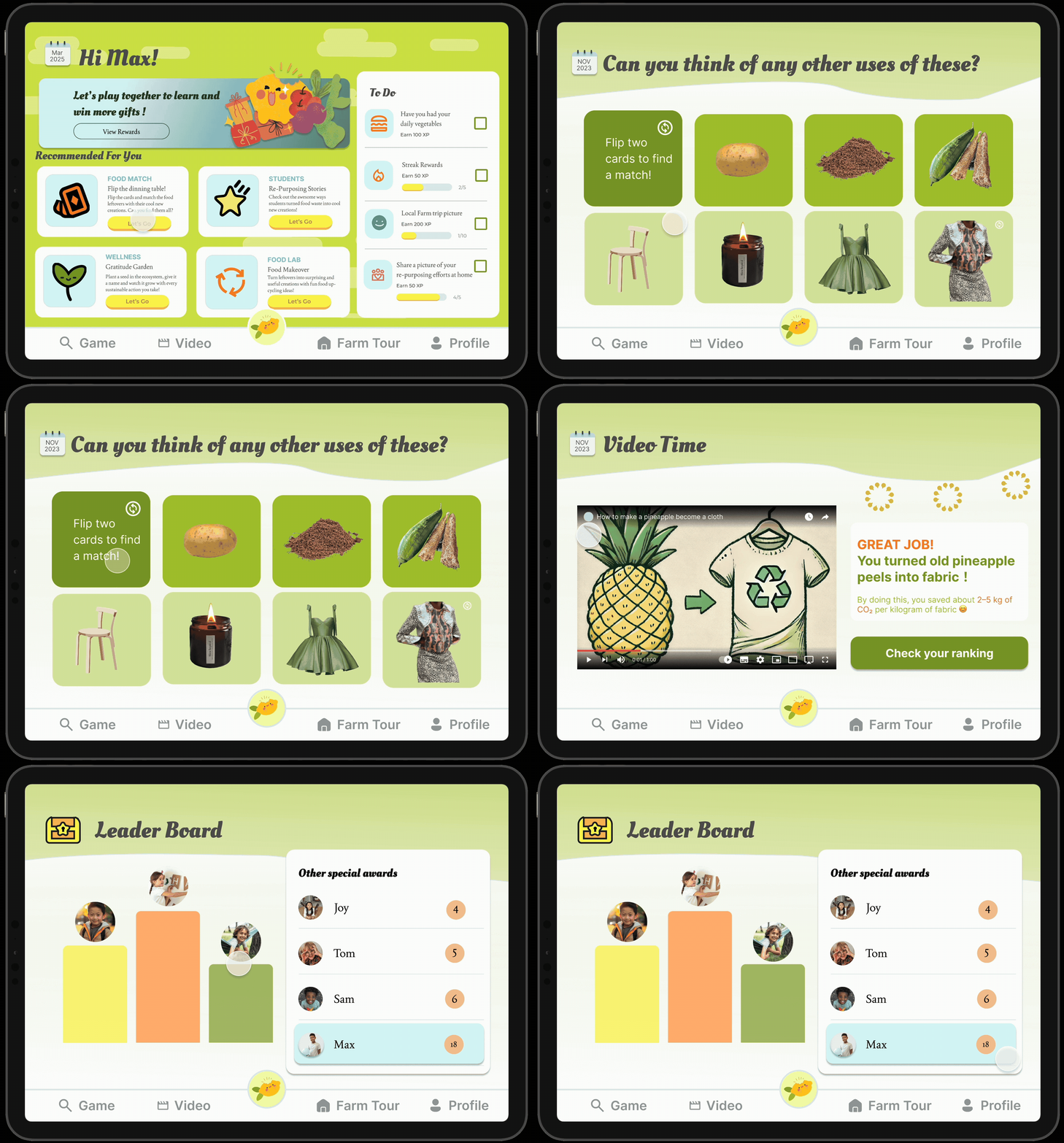
ReBite uses games, points, and rewards to motivate students to learn about food sustainability. Through activities like the Flip the Table matching game, students discover creative ways leftover food can be repurposed while earning points for completing challenges and sustainability tasks. Weekly leaderboards and rewards encourage friendly competition and help reinforce positive habits around reducing food waste.
Local Farmer Coorperations
_edited.png)
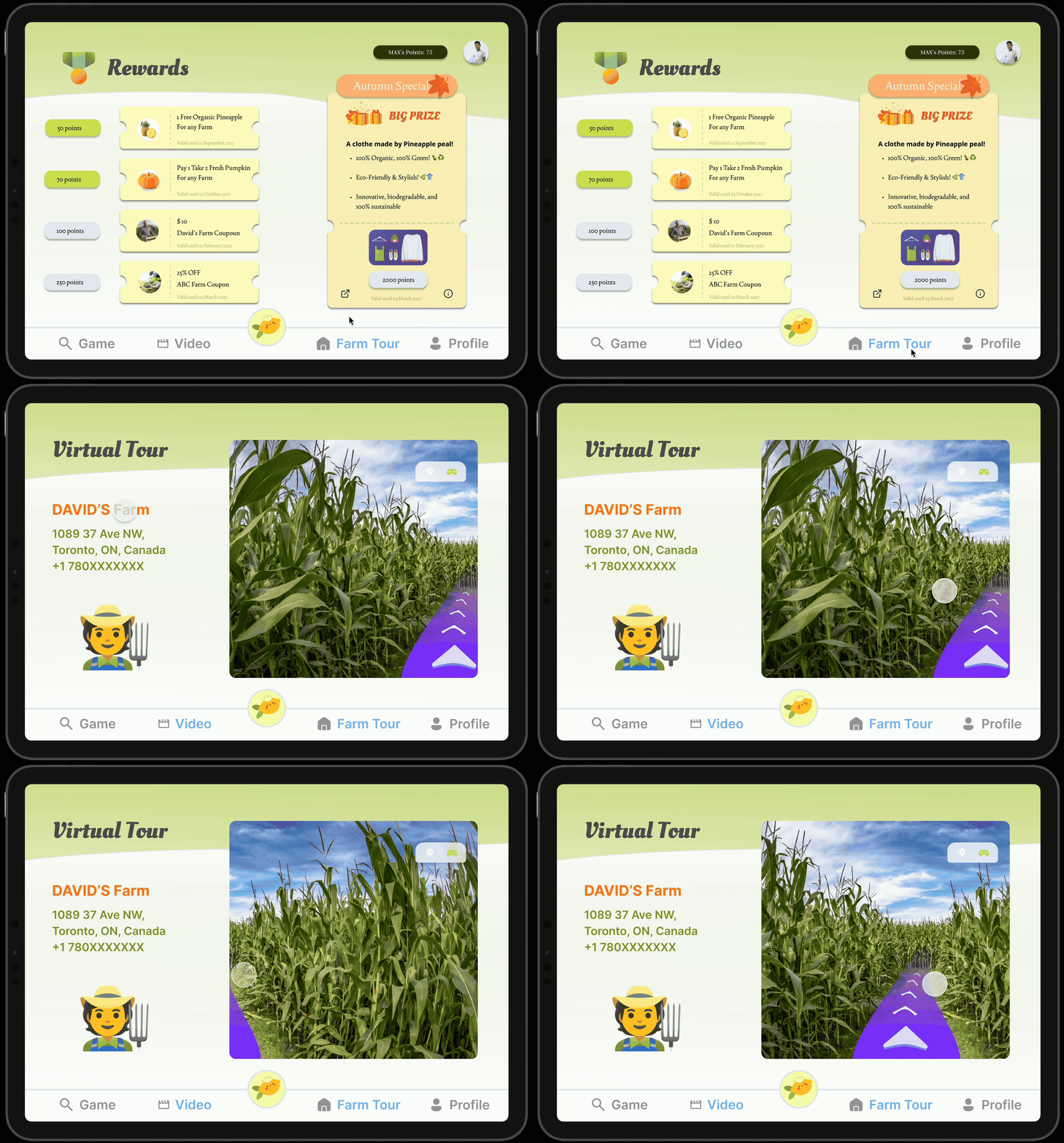
To connect classroom learning with the real world, ReBite introduces students to local farms and food producers through virtual farm tours and potential field trip opportunities. These experiences help students understand where food comes from and the effort involved in producing it. By building connections between schools and local farmers, the platform encourages greater appreciation for food and more mindful consumption.

Next Steps
Our next steps focus on refining and expanding ReBite. We plan to add more engaging games and experiences, conduct user testing in schools to better understand student needs, and explore partnerships with manufacturers for reproducible educational items. In parallel, we aim to venture into consulting to help companies understand the importance of food sustainability. These steps, guided by data and proper certifications, will ensure ReBite continues to make learning about food waste fun, interactive, and impactful.
05
ACHIEVEMENT
Winners for Food Sustainability Category and Hackathon Grand (1st Place)
 |  |  |  |
|---|---|---|---|
 |  |  |  |
_edited.png)
Lessons learned
Participating in the Seneca Hackathon was an exciting and unforgettable experience. As my first in-person hackathon, I felt both nervous and eager, but working with such an amazing team made every moment rewarding. We faced challenges deciding which features to prioritize and which direction to take, yet through collaboration and discussion, we found our path. One piece of advice from a mentor has stayed with me: when designing, it’s impossible to cater to everyone at once. Meaningful impact begins with one user at a time, taking small steps to create real change. This insight has reshaped how I approach design and problem-solving, reminding me to focus on creating value for individuals while keeping the bigger picture in mind. The experience reinforced that collaboration, iteration, and a user-centered mindset are essential to building solutions that truly matter.