

*Disclaimer: Student Project, University of Toronto| INF1602 - Fundamentals of User Experience
iSpace
Connecting Grad Students, One Space at a Time
Role
Product Designer & Researcher
Involvement
UX Research, Prototyping, Journey Mapping, Competitive Research, Usability Testing & Branding Design
Timeline
16 weeks
Team Members
Jifan Li, Yiming Zhang, Yiqin Huang & Chengbo Yu
Tools
Figma, Mural, Procreate & Google cloud softwares
01
OVERVIEW
The Problem
First-year graduate students struggle to build meaningful social connections. The campus is large and spread out, making it hard to meet people outside of classes. The heavy academic workload leaves little time for socializing. Additionally, graduate students come from diverse age groups and cultural backgrounds which can make it harder to find common ground. Many feel isolated and unsure of how to connect with others who share their interests and experiences.


Difficulty Forming Connections
Limited Socializing Opportunities
Lack of Shared Common Interest
Graduate students struggle to meet new people due to a large, dispersed campus and differences in environment, age and academic backgrounds.
Many students feel overwhelmed with academic work, leaving little time to build meaningful relationships.
Shared interests significantly ease the process of forming connections, highlighting the need for a structured way to find like-minded peers.

The Solution
iSpace is a platform that helps first-year graduate students in the same program or cohort connect with peers who share similar interests, values and academic goals. It allows them to build networks that align with their academic journey and personal interests while meeting their social needs.
02
RESEARCH
Problem Statement
First-year graduate students struggle to form meaningful social connections due to the dispersed campus environment and overwhelming academic workload.
Research
We conducted primary research through interviews with first-year graduate students from universities across Ontario, alongside secondary research on graduate student experiences and communication challenges. Our team interviewed 10 individuals, each for approximately 30 minutes, to gather qualitative insights. I personally interviewed two participants. Additionally, we performed a competitor analysis to identify existing platforms graduate students use to address their challenges and uncover potential opportunities for differentiation.
Secondary Research on Grad Students
Social Barriers
Graduate students struggle with social anxiety, making it hard to start conversations. Cultural differences and busy schedules limit opportunities to meet new peers.
Limited Opportunities
First-year graduate students have limited structured opportunities to meet like-minded peers. The large campus and lack of academic networking features in social apps make it difficult to form connections.
Impact of Connections
Building strong peer relationships improves mental well-being, reduces stress and enhances academic performance. Graduate students with strong social ties feel a greater sense of belonging, improving their overall university experience.
Lack of University Support
Graduate students receive little structured support from their university to build social connections. Orientation events are short-term and don’t foster lasting relationships. Academic departments rarely create social opportunities, leaving students to navigate social integration alone.
Digital Platform Preferences
Graduate students use social media platforms like Instagram, Discord, and WhatsApp to stay connected. However, these apps lack structured networking features, forcing students to rely on word-of-mouth or class interactions to find social groups.
Key findings from interviews
Difficulty Forming Connections
5 out of 10 participants mentioned struggling to form connections due to differences in age, environment and academic programs. One student expressed feeling isolated because of these barriers, while another mentioned how difficult it was to relate to peers in their program.
Friendships Fulfill Emotional Needs
6 out of 10 participants reported that friendships help them cope with the emotional challenges of graduate school. One student mentioned relying on friends for stress relief, while another highlighted how important peer support is for navigating academic difficulties.
Isolation Due to Social Anxiety
6 out of 10 participants cited social anxiety as a key obstacle to forming connections. One student admitted feeling too anxious to attend events alone, while another noted the challenge of fitting in with established groups.
Heavy Workload Limits Social Life
6 out of 10 participants discussed how their workload hindered their ability to socialize. One student explained that the pressure of coursework leaves little time for making new friends, while another mentioned missing out on opportunities for socializing due to academic commitments.
Digital Platforms as a Social Necessity
4 out of 10 participants emphasized the importance of digital platforms for making new connections. One participant shared how online interactions provided a lower-pressure environment, while another noted that social apps are lacking features specifically designed for graduate students.
Cultural Differences Create Barriers
8 out of 10 participants mentioned cultural differences as a significant barrier to forming connections. One international student shared feeling more comfortable bonding with peers from similar backgrounds, while another noted the challenges of navigating social norms in a new environment.
User Persona
Based on our key insights, we created a hypothetical user: Meet Jenny Lee, a first-year graduate student at the University of Toronto. She is new to both UofT and Toronto, eager to make friends and build connections in a new country. Jenny is excited about her academic journey and hopes to have a fulfilling learning experience throughout the year.

Competitor Analysis
We analyzed various apps to understand existing solutions and explore the platforms graduate students use to connect and meet new people. Based on our interview insights and market research, we identified three popular platforms among graduate students: Instagram, ZeeMee and Meetup.

Allows users to connect and chat through direct messages
Users can see peers' lives through posts and stories
Supports audio calls, video calls, and sharing likeable posts
Group chats can be created for various purposes
Not specifically designed for students or academic communities
Open to all users (ages 13+), making it less tailored for graduate students
Group chats have a limit of 250 members
Lacks academic support, research insights, or job-finding features

ZeeMee
Offers real-time chat and group messaging for social connection
Encourages peer-to-peer interaction within university communities
Helps new students feel more comfortable before arriving on campus
Does not focus on professional networking or career development
Limited resources for academic collaboration, such as study groups or research discussions
Lack of mentorship features that connect graduate students with professors or alumni
No integration with university tools like library databases, academic calendars or course materials

MeetUp
Connects individuals with shared interests, fostering meaningful interactions
Allows users to join or create events, encouraging social engagement
Enables global networking, making it useful for students studying abroad
Not widely recognized, limiting its reach and user base
Lacks features tailored specifically to graduate students, such as academic or research-based groups
Introverts or individuals with social anxiety may struggle to initiate connections without structured support
Does not provide tools for professional networking, mentorship, or career development
03
IDEATING
Core Goals

SOME BIG IDEAS ARE INSPIRING, INSIGHTFUL & USEFUL
We brainstormed and prioritized features based on participant feedback and feasibility using the Crazy 8’s technique. Here we generated as many ideas as possible in 8 minutes. After this we created a prioritization matrix and categorized our ideas into 'Must Have', 'Should Have', 'Want to Have' and 'Could Have'.
Based on our prioritization matrix, we were able to create a series of core goals which needed to be achieved in this solution

1. University System Integration
Only students with a valid UofT login and enrolled in a Master's program can join. This ensures a secure and exclusive space for graduate students to connect. By limiting access to verified users, the platform fosters a sense of trust and community. It also prevents spam or unrelated users from joining, keeping conversations relevant to academic and social life at UofT.
2. Program & Cohort Group Chats
Students are automatically added to a group chat with peers in their program and cohort. This makes it easier to seek academic help and build connections. Having a pre-set chat removes the effort of finding and gathering classmates, allowing students to engage from the start. It also encourages collaboration, making it easier to share resources, discuss coursework, and form study groups.
3. Interactive Connection Map
A built-in map allows students to find study buddies, meet during free periods, or discover nearby events. It helps facilitate both in-person and online meetups. By using real-time location-based features, students can identify opportunities to connect without excessive planning. Whether looking for someone to grab coffee with or join a group study session, the map enhances spontaneous and meaningful interactions.
4. Graduate-Specific Icebreakers
The platform provides tailored icebreaker questions and conversation prompts. These are designed to help graduate students connect more comfortably. Unlike general social platforms, these prompts are based on shared academic experiences, research interests, and common challenges in grad school. This feature reduces the awkwardness of initiating conversations and makes networking more natural and engaging.
03
DESIGING
Design Process
Initially, we focused on connecting graduate students through channels and events. Expert reviews highlighted that our app lacked uniqueness and had a cluttered homepage. Usability tests revealed that many users found the navigation bar confusing. I conducted two sessions and noticed the same issues across multiple participants. Comparing my findings with my team’s results confirmed that navigation was a major pain point, reinforcing the need for a more intuitive design.
Initial Low-Fidelity Sketches

04
USABILITY TEST
Usability Test
We performed four usability tests on the low-fidelity flows to evaluate task completion, clarity and comprehension. In addition, we pitched our project to four industry professionals, receiving valuable feedback and recommendations for refining our design.
Before

vs.

After
Navigation Bar
"Having a '+' in the navigation bar allows users to create their own channels, chats, announcements and events at their ease."
-
Two of our participants and one expert suggested fixing the navigation bar, as it could create a poor impression when users scroll
-
There was a lot of confusion around the purpose of the ‘+’ button
-
Everyone felt that the search button in the navigation bar was useless and confusing as there was search buttons also added in each page
Before

After
vs.

Homepage Modification
"Having all categories in the homepage would allow easy access. This includes an alert, notification centre, banner & different categories."
-
Three out of four participants, including one expert, noted that the homepage did not highlight key content effectively
-
Participants pointed out that notifications and alerts might overlap in function, and adjusting their prominence could improve clarity.
-
If events and channels are primary features, they should be more visible on the homepage.
-
Experts emphasized prioritizing communication features over events and channels, as competitors already offer similar solutions.
Before
After


vs.
Interest Button
-
Two out of four particpants expressed the need of an interest button to keep their favorite channels for easier ease
-
One expert highlighted that the current carousel banner design doesn’t clearly indicate that it’s swipe-able feature
04
VISUAL DESIGN
The Design System
Each team member created a moodboard and style tile to explore colours and typography. We then combined our favourite elements from each style tile to develop the final visual design, supported by keywords that captured the intended aesthetic.
Style Guide


Moodboard
Keywords: Friendly, Approachable & Trustworthy
04
DELIVERING
Final Designs
Presenting iSpace, a platform designed to help first-year graduate students build meaningful connections by providing dedicated chat rooms, real-time location-based meetups and interactive profile features for seamless networking.
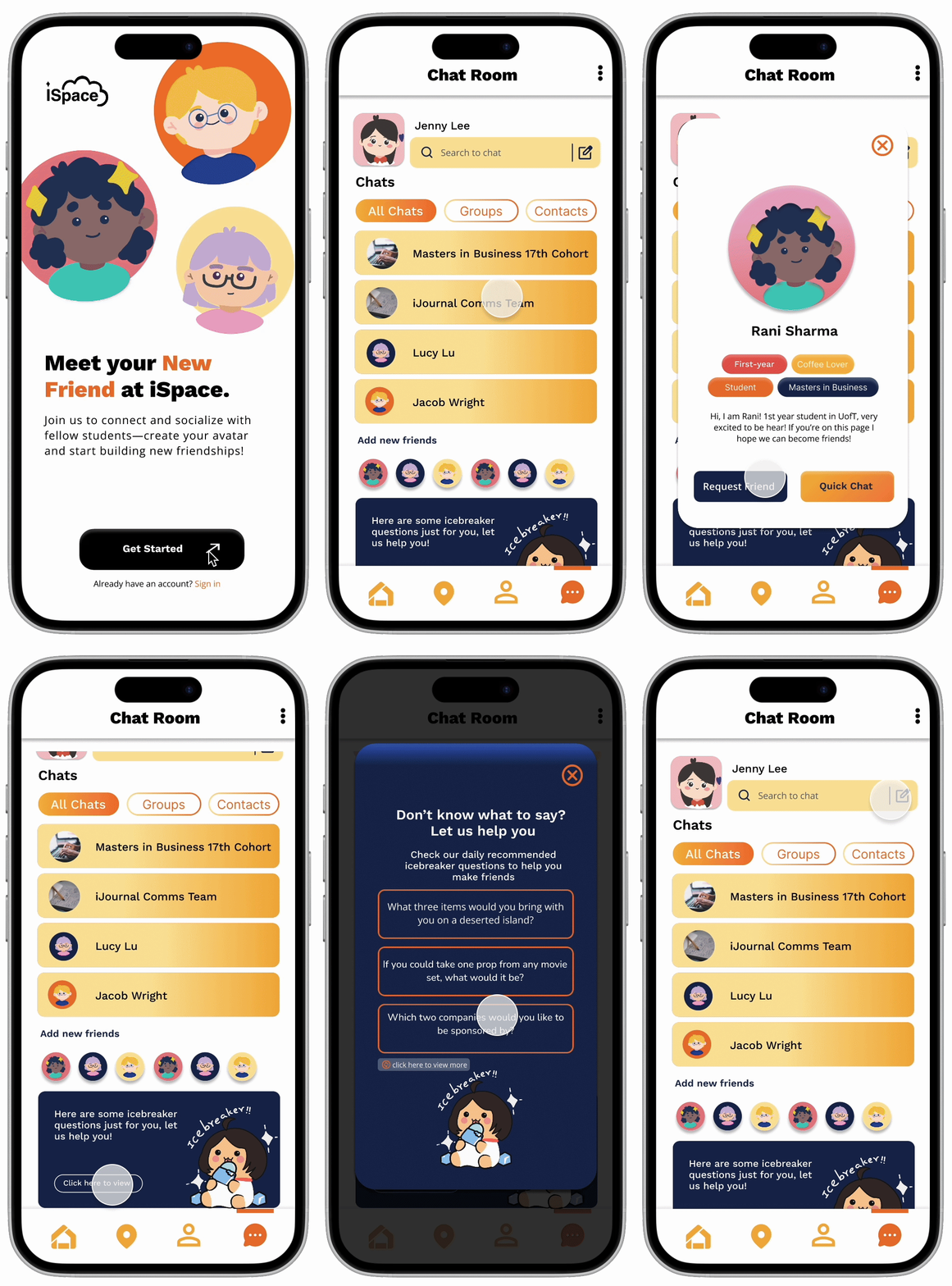
Cohort & Program Chat Rooms
Students are automatically placed in a chat room with peers from their program or cohort, making it easier to build connections and seek academic support. For introverted or shy students, built-in icebreakers—updated daily with trending topics—help initiate conversations and reduce social barriers. This feature ensures that every student has an accessible way to engage, whether for coursework discussions or casual networking.
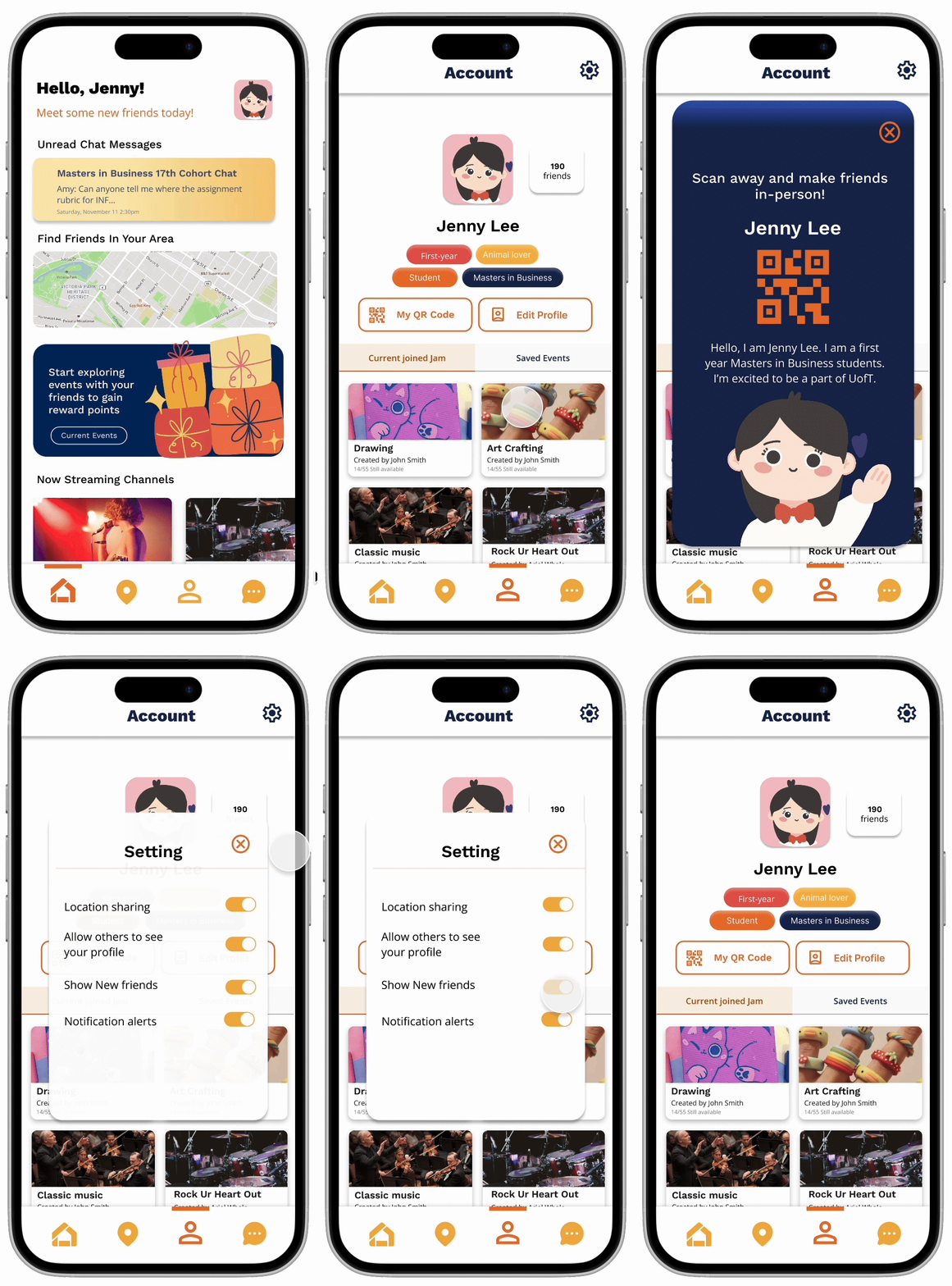
Customizable Profile & QR Connection
Each student has a profile page where they can edit their avatar, update their "About Me" section, and personalize their presence within the platform. The QR code feature enables seamless in-person connections, allowing students to quickly add each other without exchanging personal details. Additional settings provide customization options for privacy, notifications, and profile visibility.
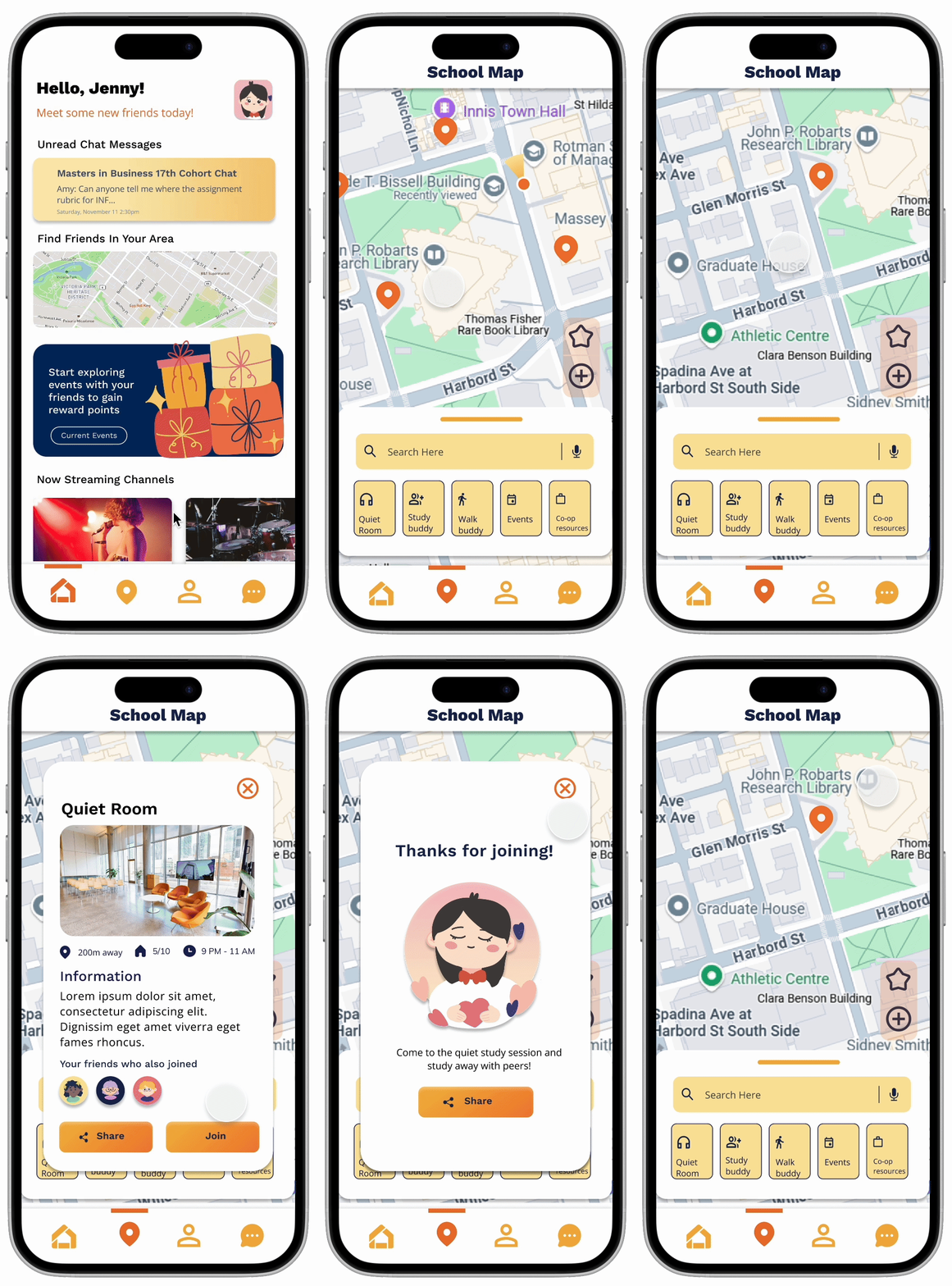
Campus Meet-Up Map
The interactive map feature allows students to find study partners, locate campus events, and arrange in-person meetups. Whether looking for someone to collaborate with during a free period or join a study group, the map makes coordination effortless. Users have full control over their privacy and can disable location sharing anytime through the profile page.
04
REFLECTION
Lessons learned
This project taught me the value of collaboration, adaptability, and user-centered design. Our team balanced tasks well and leveraged each other’s strengths. Challenges included time constraints during expert reviews and technical issues in online meetings. Overcoming these hurdles improved my communication and project management skills. This experience has prepared me to approach future UX work with confidence and attention to detail.
Next Steps
-
We plan to add a reporting system that detects flagged keywords and alerts school administrators.
-
We aim to further improve usability and enhance security to create a safe and supportive space for students.